



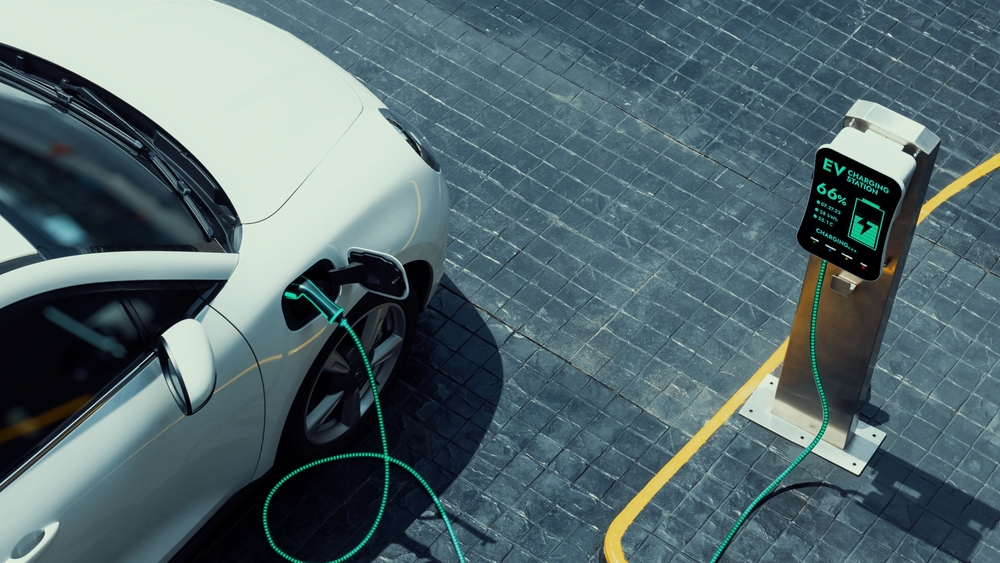
Uganda has taken a major step toward cleaner road transport with the launch of a public Uganda EV charging station in Kampala, signalling the start of a broader programme to build a network of electric vehicle charging points across the country. The pilot station, unveiled at Amber House by Dr Ruth Nankabirwa Ssentamu, Minister of Energy and Mineral Development, is the first of many planned installations to support electric mobility and sustainable transport.
The Amber House facility features high‑powered chargers capable of delivering between 30 kW and 360 kW, allowing electric cars and other EVs to recharge quickly — often up to 80 % capacity in under 30 minutes. This kind of performance is crucial to reducing “range anxiety” and making EVs more practical for everyday driving across urban and rural routes. For broader regional EV news and charging developments, visit AfricaCarNews.
Public and Private Collaboration Boosts EV Charging
The Ugandan government’s Uganda EV charging strategy emphasises collaboration with private sector innovators. Companies such as Zembo Electric, Gogo, Kiira Motors, and others are already deploying battery swap stations, fast chargers, and services for electric motorcycles and cars. This private participation is helping accelerate the rollout of charging infrastructure in Kampala and beyond.
In addition to the pilot public station, fuel retailers and commercial sites are increasingly adding charging points, offering both AC and DC options. Drivers of plug‑in hybrid cars and fully electric vehicles are beginning to use these facilities regularly, reflecting growing confidence in EV usage across Uganda.
Rising EV Adoption and Infrastructure Growth
Although electric mobility in Uganda is still in its early phases, advancements are notable. The country has seen rapid growth in electric motorcycle production, with thousands of bikes now produced annually and numerous battery swapping points in operation. Uganda’s nascent EV market also includes electric buses and cars, which are benefiting from improved charging access.
By 2024, there were already more than 30 direct current (DC) fast chargers distributed across Kampala and other towns such as Jinja, Iganga, and Nakasongola. This spread of chargers helps drivers of both personal vehicles and commercial fleets make longer trips with greater confidence.
National Strategy: Thousands of Chargers by 2040
Looking ahead, Uganda’s long‑term plan for Uganda EV charging aims to build a comprehensive charging network across the country. The government has set ambitious goals to install at least 3,500 public charging stations by 2040, supported by more than 10,000 fast chargers — roughly one charging point every 50 km. This future network would significantly enhance the usability of electric cars, two‑wheelers, and buses on major roadways and intercity routes.
The phased rollout, already underway with the Kampala pilot, is expected to encourage more vehicle buyers to consider EVs and reduce the dominance of fossil fuel vehicles. By expanding charging access, Uganda is strengthening its transport sector’s resilience and emissions profile.
Overcoming Challenges to Widespread Adoption
Despite progress, challenges remain. Access to reliable electricity outside major urban areas is still limited, and many regions experience grid instability, which could slow the expansion of Uganda EV charging networks. Investments in renewable generation and grid upgrades are therefore essential to support future growth.
Overall, Kampala’s first public charging station represents a key milestone in Uganda’s transition to electric mobility. With continued public‑private cooperation, expanding fast chargers, and strategic national planning, electric vehicles are poised to become an increasingly common sight on Ugandan roads.
What do you think would make electric vehicle charging even easier for drivers in Uganda — more public stations, better policy incentives, or cheaper charging prices? Let us know in the comments below!


